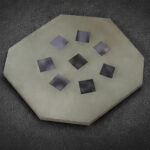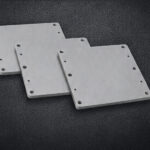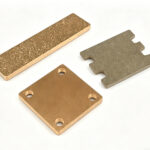

As semiconductor devices shrink in size while skyrocketing in power density, traditional thermal management materials like copper and aluminum are hitting their physical limits. In high-power electronics, optoelectronics, and RF devices, dissipation failures are the leading cause of component degradation. Enter the diamond heat sink—the ultimate thermal spreader known to modern engineering. This comprehensive guide explores why diamond is revolutionizing thermal management, how it compares to traditional materials, and when it becomes the most cost-effective choice for your high-tech applications.
What is a Diamond Heat Sink and Why is it Superior?
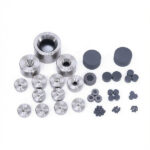
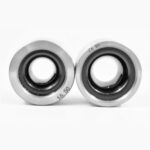
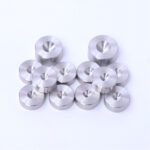
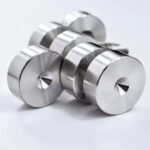
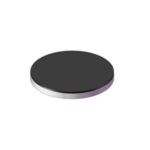
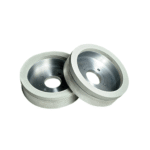
A diamond heat sink (or diamond thermal spreader) is a thin substrate made of synthetic diamond—typically produced via Chemical Vapor Deposition (CVD). It is integrated directly beneath high-power semiconductor chips to rapidly draw away concentrated heat, preventing the formation of destructive “hot spots.”
Diamond’s superiority is rooted in its unparalleled physical properties. At room temperature, high-quality CVD diamond boasts a thermal conductivity of up to 1000 to 2000 W/m·K. This is up to 5 times higher than pure copper and nearly 10 times higher than conventional aluminum oxide or silicon carbide ceramics. By matching this extreme thermal dissipation with high electrical insulation and low dielectric loss, diamond stands out as the holy grail of semiconductor packaging.
Thermal Property Comparison: Diamond vs. Traditional Materials
To understand why aerospace, defense, and 5G telecommunication industries are aggressively switching to diamond thermal spreaders, let us look at the hard technical parameters:
| Material | Thermal Conductivity (W/m·K) | Coefficient of Thermal Expansion (CTE) (ppm/K) | Electrical Resistivity (Ω·cm) | Maximum Operating Temp (°C) |
|---|---|---|---|---|
| CVD Diamond (Grade Grade) | 1000 – 2000 | 1.0 – 1.5 | > 1011 (Excellent Insulator) | > 700 (In vacuum/inert gas) |
| Copper (Cu) | 400 | 16.5 (High mismatch) | 1.7 x 10⁻⁶ (Conductor) | < 300 (Oxidizes rapidly) |
| Aluminum Nitride (AlN) | 170 – 230 | 4.5 | > 1012 | > 1000 |
| Silicon Carbide (SiC) | 360 – 490 | 4.0 | 102 – 106 | > 1200 |
The CTE Advantage: One of the biggest challenges engineers face is thermal stress. When a semiconductor chip heats up, it expands. If the heat sink expands at a radically different rate, the solder joints will crack. While copper expands too much (CTE 16.5), premium CVD Diamond Heat Spreaders from UKing Diamond offer an extremely low CTE (1.0 – 1.5) that aligns perfectly with advanced wide-bandgap semiconductor materials such as GaN (Gallium Nitride) and Silicon, virtually eliminating thermal fatigue.
Key Applications of Diamond Heat Sinks
Where exactly do the high deployment costs of diamond pay for themselves? Diamond thermal management is critical in industries pushing the boundaries of physics:
- High-Power Laser Diodes & Optoelectronics: Industrial laser cutting and medical lasers require laser diode bars to run at intense currents. Diamond submounts keep junction temperatures low, preventing wavelength shifting and ensuring stable laser beam output.
- GaN RF Power Amplifiers for 5G/6G: Telecom base stations handle massive amounts of data, generating extreme localized heat. Integrating a diamond heat spreader directly under the GaN devices dramatically increases power output and coverage range.
- High-Performance Computing (HPC) & Space Electronics: In satellite communications and aerospace radar systems, cooling systems must be lightweight yet ultra-efficient. Advanced thermal solutions like Diamond Aluminum Composites offer maximum cooling without adding unnecessary physical volume or weight.
The Engineering Dilemma: Metallization and Bonding Challenges
On forums like Reddit, engineers frequently ask: “If diamond is so great, why isn’t everyone using it?” The answer lies in the complexity of bonding diamond to metal.
Because diamond is chemically inert, standard solder will not adhere to its surface. To solve this, advanced manufacturers apply a process called surface metallization. Thin layers of refractory and noble metals (such as Titanium, Platinum, and Gold – Ti/Pt/Au) are deposited onto the CVD diamond plate. This allows the diamond heat sink to be seamlessly brazed or fluxless-soldered onto RF packages or copper carriers using Eutectic AuSn (Gold-Tin) alloys, solving the interface thermal resistance problem.
Frequently Asked Questions (FAQ)
Is CVD diamond better than natural diamond for heat sinks?
In terms of cost-efficiency and scalability, CVD diamond is vastly superior. While natural Type IIa diamonds have excellent thermal properties, they are irregular in shape, limited in size, and cost-prohibitive. CVD technology allows for the precise manufacturing of uniform, large-area diamond wafers cut into exact custom dimensions for industrial use.
What if I need balanced thermal expansion and machinability?
For applications where pure CVD diamond is difficult to integrate, metal-matrix composites are the ideal alternative. Utilizing Diamond Copper Composites allows engineers to achieve a high thermal conductivity (typically 500-600 W/m·K) while tailoring the coefficient of thermal expansion to match specific semiconductor substrates perfectly.
How does a diamond thermal spreader lower overall system costs?
Although the upfront component cost is higher than copper, a diamond heat sink enables chips to run up to 30% cooler. This allows engineers to safely increase device power density, reduce the need for complex, bulky liquid-cooling systems, and extend the overall lifespan of expensive semiconductor setups—yielding a much higher long-term ROI.
Conclusion & Technical Support
Thermal management is no longer just an afterthought in electronic packaging—it is the deciding factor in device performance. Implementing a high-thermal-conductivity CVD diamond heat sink or advanced diamond-metal composites is the ultimate way to unlock the true potential of high-frequency and high-power electronics.
When engineering high-performance cooling systems, choosing the right material grade, thickness, and matrix composite is vital to success. As a trusted pioneer in superhard materials, UKing Diamond provides advanced technical consultation and precision thermal management solutions—including premium Single Crystal Diamond Heat Spreaders—tailored to meet the strict demands of modern semiconductor and aerospace applications.