
Aluminum alloys are among the most widely machined materials in the automotive, aerospace, electronics, and general manufacturing industries. When selecting cutting tools for aluminum machining, tool manufacturers and end users often compare polycrystalline diamond (PCD) and carbide tooling. While carbide tools remain a popular choice for general machining, PCD tools offer significant advantages in high-volume production environments where tool life, surface finish, and machining consistency are critical. This comprehensive guide compares PCD and carbide cutting tools for aluminum machining and explains when upgrading to PCD becomes economically beneficial.
What Is the Difference Between PCD and Carbide?
Carbide tools are manufactured from tungsten carbide particles bonded with a metallic binder, typically cobalt. In contrast, PCD tools are produced using synthetic diamond particles sintered under high pressure and high temperature (HPHT) onto a tungsten carbide substrate. Because diamond is one of the hardest known materials and significantly harder than tungsten carbide, PCD tools provide exceptional wear resistance, a low friction coefficient, high thermal conductivity, and superior edge retention to maintain cutting edge integrity for much longer periods.
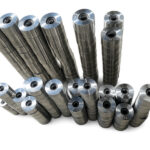
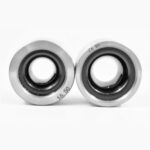
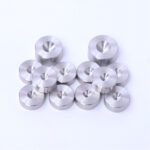
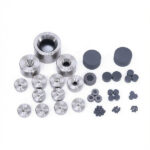
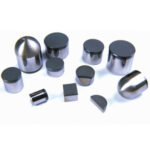
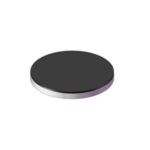
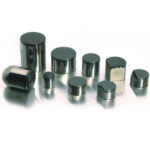
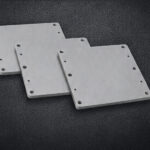
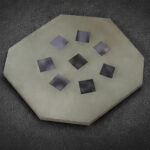
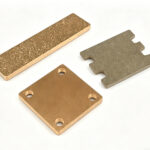
The performance of a finished PCD cutting tool begins with the quality of the starting material. Tool manufacturers commonly use high-quality PCD Cutting Tool Blanks as the foundation to produce inserts, reamers, drills, router bits, and custom tooling profiles through EDM cutting, laser cutting, and precision grinding.
| Property | PCD Tools | Carbide Tools |
|---|---|---|
| Hardness | Extremely High (Approx. 8000 HV) | High (Approx. 1500-1800 HV) |
| Wear Resistance | Excellent (Up to 50-100x higher) | Good |
| Tool Life | Very Long | Moderate |
| Surface Finish | Excellent (Capable of mirror finish) | Good |
| Cutting Speed | Very High (Up to 2500 m/min) | Medium (Up to 500 m/min) |
| Cost per Tool | Higher | Lower |
| Cost per Machined Part | Often Significantly Lower | Often Higher in Mass Production |
Tool Life Comparison: How Long Do PCD Tools Last?
Tool life affects far more than tooling cost alone; it directly impacts machine downtime, tool change frequency, labor costs, scrap rates, and inventory requirements. In many non-ferrous and highly abrasive machining applications, PCD tools can achieve a service life 10 to 50 times longer than conventional carbide tools. The exact improvement depends heavily on the workpiece material, cutting parameters, coolant conditions, and machine stability.
This massive leap in tool life is why leading tool manufacturers rely on ultra-consistent raw materials, such as premium PCD Cutting Tool Blanks from UKing Diamond, to ensure maximum wear resistance during highly abrasive non-ferrous machining runs. The greatest advantages are often seen in environments where carbide experiences rapid flank wear. Applications that typically benefit from the extended life of PCD include:
- High-silicon aluminum alloys (e.g., A390, A356)
- Die-cast aluminum components (automotive wheels, engine blocks, transmission housings)
- Aerospace aluminum parts (structural components from 7075 or 6061)
- Abrasive non-ferrous materials (Graphite electrodes, CFRP composites, and wood composites)
| Application / Workpiece Material | Carbide Tool Life | PCD Tool Life |
|---|---|---|
| Standard Aluminum Alloys (Low Silicon) | Standard | Significantly Longer (10x – 20x) |
| High-Silicon Aluminum (A390, etc.) | Limited (Rapid Flank Wear) | Excellent (30x – 50x Longer) |
| Graphite Machining | Moderate | Excellent Long-term Stability |
| CFRP / Fiberglass Composites | Moderate | Excellent Delamination Prevention |
| Wood Composites & MDF | Moderate | Excellent Edge Sharpness |
Surface Finish and Productivity Performance
Surface finish requirements continue to increase across automotive and aerospace manufacturing. Because PCD tools are capable of maintaining extremely sharp cutting edges throughout their service life, they deliver a degree of surface finish stability that carbide cannot match. As carbide tools wear, surface finish quality gradually deteriorates, leading to higher scrap rates. PCD tools typically maintain lower surface roughness, better dimensional consistency, reduced burr formation, and improved part appearance. For applications requiring mirror-like finishes or tight dimensional tolerances, PCD tooling is the industry standard.
Furthermore, because of their superior thermal conductivity and wear resistance, PCD tools can operate at significantly higher cutting speeds and feed rates. This increased productivity leads to reduced cycle times, improved machine utilization, and lower overall manufacturing costs in high-volume production environments, easily outweighing the higher initial tooling cost.
Cost Analysis: Is PCD Worth the Investment?
Many buyers focus only on the upfront purchase price of a cutting tool. However, the true cost should be evaluated based on the total machining cost per component rather than tool price alone. Although PCD tools have a higher initial cost, they frequently reduce the cost per machined component in large production runs by minimizing machine downtime and tool replacement frequencies.
- For low-volume machining: Carbide remains the more economical option due to lower initial investment and suitability for short prototype work.
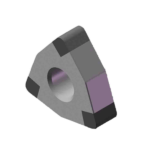
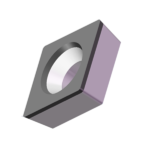
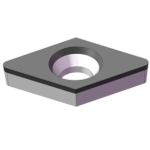
- For medium- to high-volume production: High-performance PCD Inserts provide a lower overall manufacturing cost, delivering maximum return on investment (ROI).
When Should You Choose PCD Instead of Carbide?
To optimize your machining efficiency, use the following guidelines to select the right tooling material:
Choose PCD cutting tools when:
- Machining highly abrasive aluminum alloys with high silicon content.
- Producing large quantities of parts where tool consistency is critical.
- Achieving superior, mirror-like surface finish or tight dimensional tolerances.
- Long, predictable tool life is required to run automated or lights-out manufacturing.
Carbide tools may still be suitable for:
- Low-volume production runs and prototype machining.
- General-purpose applications with frequent setup modifications.
- Budget-sensitive projects where tool life is less critical.
Frequently Asked Questions
Can PCD tools machine aluminum better than carbide?
Yes. In most high-volume and abrasive aluminum machining applications, PCD tools provide exponentially longer tool life, better wear resistance, higher cutting speeds, and improved surface finish stability compared with carbide tools.
Are PCD tools suitable for high-silicon aluminum?
Absolutely. High-silicon aluminum alloys are highly abrasive and cause rapid flank wear on carbide. Highly wear-resistant PCD tooling is the most common and effective solution for these specific materials.
Is PCD always better than carbide?
Not necessarily. Carbide tools are more economical for low-volume machining, prototyping, or general-purpose work. Additionally, PCD is generally not recommended for steel or ferrous metal machining due to a chemical reaction at high cutting temperatures. For hardened steels above HRC45 or cast iron, manufacturers select Whole Welding CBN Inserts or standard CBN Inserts rather than PCD tooling.
How do I select the right PCD grade for my tools?
Key selection factors for your starting materials include diamond grain size, diamond layer thickness, wear resistance requirements, and application material. Choosing the correct PCD blank grade helps optimize both tool performance and tool fabrication efficiency.
Conclusion
Both carbide and PCD cutting tools have their distinct places in modern manufacturing. Carbide remains a versatile and cost-effective solution for general machining, while PCD offers superior wear resistance, productivity, and surface finish in demanding aluminum and non-ferrous machining applications. For manufacturers seeking longer tool life and a lower cost per component, high-quality material selection is crucial.
For technical guidance on selecting the appropriate PCD grade, UKing Diamond supplies a wide range of premium PCD Cutting Tool Blanks and finished PCD Inserts tailored for various high-performance machining applications.